
This post was written by Michelle Nolan, MLS (ASCP), point-of-care testing specialist, Parkview Health.
When you visit a clinic, urgent care or hospital, your healthcare provider may order tests to help diagnose or manage your care. Sometimes you get results right away, and other times you’re told to wait hours or even days. This can be confusing for patients. The reason usually comes down to where and how the test is performed.
This blog will help you understand the difference between point-of-care testing and Laboratory Testing, why both are used, and what it means for your care.
What is point-of-care testing?
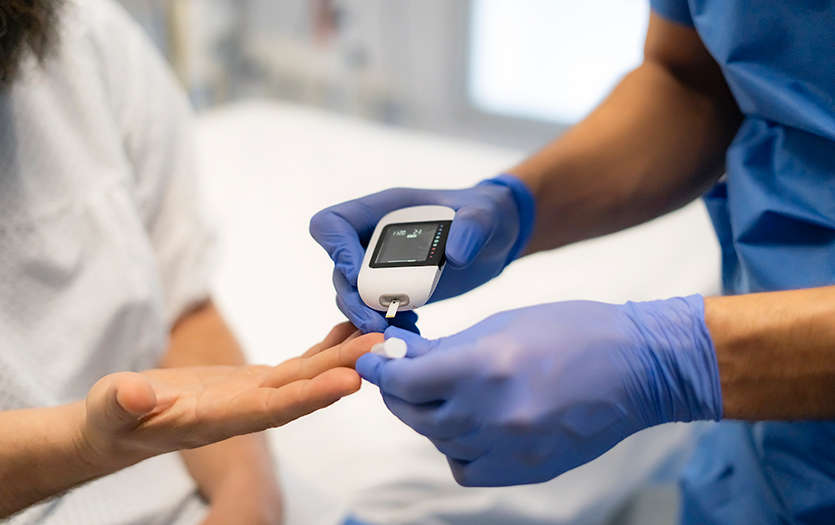
Point-of-care testing (POCT) means tests that are done at or near where you receive care—often right in front of you. These tests are usually performed by nurses, medical assistants or providers using small handheld or tabletop devices. This offers:
-
Results in minutes.
-
Testing done during the same visit.
-
Faster treatment decisions.
What is laboratory testing?
Laboratory testing happens in a central hospital or clinic laboratory. Your blood, urine or other samples are collected and sent to the lab for analysis by trained laboratory professionals using specialized equipment. This offers:
-
More detailed results.
-
Tests that look deeper into your health.
-
Results may take hours or days.
Why do some tests give instant results while others don’t?
Point-of-care tests are designed for quick results, while laboratory tests are designed for thorough, highly detailed analysis. The difference depends on how complex the test is, how precise the result needs to be and how much information the test provides.
Benefits of POCT
-
Faster answers. POCT allows your healthcare provider to make decisions immediately—such as starting treatment, adjusting medication or deciding whether additional tests are needed.
-
Fewer appointments. Many conditions can be evaluated and treated in one visit, saving you time and follow-up trips.
-
Convenient and less stressful. Getting results right away reduces anxiety and waiting.
Limitations of POCT
-
Less detailed information. While POCT is fast, it may not provide the same depth of information as a laboratory test.
-
Not available for every condition. Some complex health issues require specialized lab testing that cannot be performed at the bedside or clinic.
Benefits of laboratory testing for patients
-
Highly accurate and detailed, making them ideal when precision is critical.
-
Broader range of testing. Laboratories can test for a wide variety of conditions, including rare or complex diseases.
-
Supports long-term care plans. Lab testing helps providers track changes over time and confirm diagnoses.
Limitations of laboratory testing
-
Longer waiting time. Results are not always immediate due to specimen transport and processing.
-
More follow-up needed. Some lab tests require additional visits or phone calls once results are available.
Which type of testing is better?
For patients, the answer is neither is better—both are important. Healthcare teams choose testing based on:
-
How urgent your symptoms are.
-
What information is needed right now vs. later.
-
Whether a quick decision or a detailed analysis is required.
Many providers use a combination of point-of-care and laboratory testing to provide you with the best possible care. Think of it this way. If you get results right away, your provider is addressing an immediate need. If you’re asked to wait, your provider wants the most accurate, detailed information for your care. Both approaches are used with the same goal: keeping you safe, informed and well cared for.
Final thoughts
Understanding why tests are done differently can make healthcare visits less confusing and stressful. Whether your test is done in minutes at the bedside or analyzed in a laboratory, each plays an important role in diagnosing conditions, guiding treatment and supporting your health journey. If you ever have questions about a test or your results, don’t hesitate to ask your healthcare team—they’re there to help.